Saturday, 23 October 2021

Hola from Barcelona!

 Hello there! Gracia here from the beautiful city of Barcelona. Let me walk you through my overall experience here, with a special focus on my study life and college! 

Arriving to Barcelona felt like a dream. Throughout the whole summer I kept looking forward to the moment when I would fly to Spain. My expectations were significantly high and this city has surpassed each and every one of them. 

The hot weather was very much appreciated! I was very excited for this and to be able to soak up some well awaited sunshine. 

The life, the people, the shops, the streets, the overall environment is so enriching, both culturally and socially. Since the moment I landed, it was non stop. Tourist mode was officially activated. 

Visited markets, restaurants, pubs, beaches, museums, towns, shops, parks, zoos, food stands...the whole lot! 

I really wanted to take advantage of the few days I had before starting the reason why I came here in the first place...college. 

I am very passionate about my studies and when I found out that the University of Barcelona had the best Culinary Degree in all of Spain? Thats it. Decision = made. I needed a minimum of 20 credits so I ended up choosing fours modules: 

1. Creative Processes and Technological Appliances in Modern Cuisine 

2. Sweet Cuisine and Pastry

3. Local and Global Cuisine

4. Team Development and Managerial Practises

The reasons why I chose these specific modules are because; first of all, they are very varied and each touch on different aspects of what being a chef encircles. Also, each of the modules correspond to different year groups in the Culinary Arts course. Resulting in me being with a different class from each year with every module (1st to 4th years); which has allowed me have a bigger understanding of the educational level and have a wider friend group. All pros so far!

Shrimp Pannacotta
"Fideua"

If I had to choose a favourite module so far it would be the Creative Processes and Technological Appliances in Modern Cuisine. The aim of this subject is to teach you how to be creative. They give you all the help and means in order to push and let out your inner creativity. In the practicals, they put you in a situation where they push you to your limits, and the only way out is to be creative. For instance, one day they told us we had to make a typical Spanish dish called "fideua" (essentially a seafood pasta with a tomato base cooked in a paella pan), without being able to use any of the ingredients that the original dish contains, AND it had to look and taste like so. The ingredients that we couldn't use included: pasta, seafood, tomato, salt, oil, water, flour, etc. My mind went :????. This is what I came up with: (see picture on the right). 

Or the time I was asked to make a dessert with the given ingredients and all they gave me was shrimp?! (see picture on the left)

Black Forest anyone?

In terms of the pastry module...I was shocked. I can hereby say that I have met the best pastry teacher EVER! The theory classes are prior to the practicals and there we are explained the science and chemical reactions behind all pastry elaborations. You know you are given a lot of information when your hand hurts from all the notes you take after each class :/. And the practicals live up to the standard, trust me. Who ever said pastry is calming and relaxing? Please come to the University of Barcelona and they might change your mind. 

The Local and Global Cuisine module is a very fun one! Essentially, the idea behind it is that you make a dish that has a local origin and transform it into a Global concept. I would dare to say that this is the busiest module that I have. The practical classes are hectic! And by hectic I mean that you are given 7 traditional dish recipes, and you have elaborate the 7, then make an author and a finger food version out of the 7; all of course respecting the aspects and originality of the traditional given dishes. Therefore, you have to present 21 dishes in a time period of 4 hours. "Don't forget to have fun" they say...
Bellow is an example of one of the many dishes we've done in this class: we had to make the three different dishes based off of a traditional almond biscuit.

TRADITIONAL "Biscotti"

AUTHOR "Biscotti"

FINGER FOOD "Biscotti"

The managerial class is the one full theoretical class that I take. Its great and gives an in depth insight of the principles of management, team forming and leading, and organising and overall development of a business. Might be handy for the future? Who knows!

All in all, the University of Barcelona indeed has an AMAZING culinary programme, it has won the award of one of the best of the best! I am absolutely delighted with what I am learning and how far I am progressing in my studies here. Hard work pays off, right? 

:)

Talk soon! - Gracia


Friday, 22 October 2021

My first month in Coleraine

Hello, I'm Debbie Jiang, a third year student from WIT Culinary Arts. This semester, I chose to go to the University of Ulster for a one-semester exchange program. We specialize in product development and food innovation. I am interested in this major because I want to know more about food innovation. Our courses run through the whole major. We have year 1, year 2 and year 4 classes, but only three days a week, so that I can have more time to do what I want to do.✌


The scenery here is picturesque, not as cold as I expected, nor as rainy every day. The ecology here is good, but watch out! Wasps are likely to chase you (just kidding, they're just noisy, they don't sting you). I live in the student apartment on campus, which is very close to the school and only 5 minutes walk to the teaching building, which is very suitable for students who want to sleep in. The weekly rate here is 115 pounds, including miscellaneous fees. The reception desk of the dormitory is very hospitable, providing free snacks and organizing entertainment activities every week.👀


The main means of transportation here is train. Before I came here, I thought it was very inconvenient to travel, but later I found it is very convenient. All you need to do is download an App and it will tell you all the train schedules and bus schedules. It takes 40-45 minutes to walk to the city centre, but only 4 minutes by train. The price is around 2 for return trip and is cheaper with a monthly or seasonal pass. Supermarkets, clothing stores, pharmacies, everything is very convenient in the city center. I often go to a movie theater downtown with my friends. There are bowling alleys and student prices are very good. If you like Asian food, I recommend Yoko here. They do a great Beijing duck pancake.👍


All in all, life here is not as boring as I thought at first, but full of surprises. You can always have a lovely date with your good friends and sit in a coffee shop downtown for an afternoon and catch up on the latest happenings. Or head to the bar for an evening drink and soak up the atmosphere. If you have time, take a quick trip and go to Belfast for a fun weekend. In short, it's all there to explore.☺☺☺☺


Wednesday, 20 October 2021

First month in Coleraine


Hi guys, I am Faith, and I am one of the seven W.I.T students studying in Coleraine at the university of ulster. Up here we are a part of the consumer management and food innovation degree. We are taking three modules: product development, applied sensory science and quality control and food studies and nutrition.  

Product development: this class is all about developing a product for the market. We have to work in groups to create plant-based children's products using food waste from companies e.g., apple pulp from a cider company, aquafaba, oat bran or leek trimmings. At the end of the semester, we have to pitch our product to manufacturers to see if they like the product and want to further develop it. 

Applied sensory science and quality control: this module looks at the senses and what role they play in consumers liking a product or not. Like in product development we are working in teams to trial our given company against their competitors to see how they are doing on the market. My group is working with Finnebrogues meatless sausages, and we have to find out how popular they are against other vegetable-based sausages. 

Food studies and nutrition: this module is an introduction to nutrition and how to predict trends. We look at food trends that are happening and why they are popular, but the class is mainly focused on basic nutrition e.g., macro and micronutrients. 

The campus itself is quite large but all of our classes are in the same room so once you know your way to the room you are fine. The university offers loads of different clubs/societies for you to join, and they have a lot of facilities to offer. I live in the student accommodation in Cranagh village, there are five people per apartment, and I share the flat with two girls from W.I.T and the two others who are also on Erasmus. The rooms are all ensuite and have a lot of storage areas to put your items in, it is handy because we are on the ground floor, we did not need to carry all our stuff upstairs. 

Coleraine itself is quiet, which suits me and both Portrush and Portstewart are not far away by train, so it is easy to pop out there. They have a lot of walking trails around the place, on campus they have a woodland trail which is nice to do after class. If you want to go shopping it is best to get the train over to Derry and have a wander. 


Wednesday, 6 October 2021

A piece of Belfast !!


Hi there,

 Lee-Ann here from the Culloden Estate and Spa in Belfast Northern Ireland. I am a level 8 Culinary Arts student from Waterford Institute of Technology. I am doing my work placement here from August to December.

The Culloden estate and spa are owned by the hasting’s group. They have seven hotel which are Europa, Stormont, the grand central, the Culloden estate and spa hotel which are all in Belfast, slieve Donald resort and spa in country down, everglades hotel in Derry and Ballygally castle on atrium coast. The Culloden estate and spa are a 5-star hotel which was built in 1876. It took two and half years to finish the Culloden. The Culloden became residence to lord bishops in 1900s. The Culloden house was converted into a boutique hotel by whites which the Culloden became known for the French furnishing, beautiful painting and excellent food. The hotel was bought by Sir. William Hasting in 1967. The hotel has 105 deluxe bedroom suites, 11 self-catering apartments, 6 private banqueting suites and health club and spa. The Culloden is based in Cultra which is 6 miles from Belfast. The Cultra train station is 3 minutes from the hotel which brings people into Belfast or Bangor.


When I arrived, the staff were so helpful and showed me where to go and what to do. I am staying in staff accommodation which is part of my contract. It is a double bed, wardrobe and my own bathroom. There is a small kitchen area which has a microwave and kettle to make your breakfast in the morning. I mostly get my meals down in the Cultra Inn where I work.

I am working in Cultra Inn which is a Bistro and is situated 5 minutes away from the main hotel. There are four- five chefs working in the kitchen. I mainly work on the dessert section, starters section and the pass. I start at 12 and prep all the food for that day and next day then setup my section and top up other sections.  On Sunday lunch is very busy and popular. We try to change the menu every week as the regular customers come in every Sunday for lunch. We have an A La Carte menu which consists of chicken wings, Caesar salads, smoked salmon, steaks, burgers, confit duck legs. The chefs have all been so helpful and patient and I feel like I am learning so much from all the different chefs I work with.

     Some of Sunday lunches menu:

sticky toffee pudding with chocolate soil, vanilla ice-cream and toffee sauce. 

 lemon drizzle cake with mixed berries compote, chocolate soil and mascarpone cream.                 

smoked salmon with wheaten bread, crème fraiche, mixed leaves and capers.              


  Traditional Irish turkey & ham with mashed potatoes, roast potatoes, herb stuffing, Yorkshire pudding, seasonal vegetables and pan jus. 


The head chef is starting soon so hopefully new changes to the place and the menu. I hope you’ve enjoyed reading my Belfast experience so far.

Thanks

Leeann  

Thursday, 2 July 2020

Johnson & Wales University, Providence campus

The first and largest of the four Johnson & Wales University campuses, the Providence campus is home to more than 9,000 students and is spread across 176 acres in the city center, as well as being among the most highly-regarded culinary schools in the United States. The school was originally established in 1914 as a business school but over the years it has developed to include a number of other disciplines and the Johnson & Wales Universities are now the largest food service educator in the world.


Culinary, hospitality and business programs are by far the most popular courses, although there are also arts & sciences, graduate, engineering and design programs available.

Around half of the JWU student population live in one of the 13 on-campus residence halls, while many others choose to live in downtown Providence, one of the United States’ oldest cities and home to over 30,000 students (more on this later). The city itself is a renowned cultural center and has an extensive waterfront full of bars and restaurants, while the cities of Boston, Cape Cod, Newport and New York are a short drive away.

The university has produced some world-famous chefs who work in countries all over the world. Among the famous faces that have graduated from JWU Providence are Randal Tye Thomas, the former mayor of Gun Barrel City in Texas, as well as celebrity chefs Chris Santos and Emeril Lagasse.

Here’s a link to learn more and explore the campus and opportunities for yourself - https://www.jwu.edu/campuses/providence/life-on-campus/index.html


Johnson and Wales is great for practical classes, in fact all of their classes involve practical's in some ways. They have a wide array of classes you are going to find here. I know myself my modules were Brewing Arts, Exploring Cheese, Garde Manger, Classical cuisines of France and Italy and something else which eventually was changed to nutrition for online classes.

An interesting thing that happens when you’re an exchange student is you’re placed in a variety of years for classes. One practical may be with 1st years and another with 3rd or 4th years so it’s a strange situation but allows for you to see the quality of the students and teachers at different levels.

My advice for anyone in general is always do the work part first. Work over the summer and give yourself as long as possible to learn but also to earn as much money as you can to attend college. Johnson and Wales is by no means cheap to attend. I’ll speak in detail about some of these certain aspects more in a moment but just speaking financially (approximate figures):
·         Accomodation (which is mandatory) - $4000
·         Meal Plan (mandatory) - $1450-$1700 depending on which option you take
·         Insurance / Nurse – To pay for access to the nurse on campus is $600 per semester or go over having your own private insurance which I had done and cost between 150-200 euro.
·         Flights – Depends when you buy them, flights are a luck of the draw. I purchased mine late because I had a delayed embassy appointment and paid around 750 euro return.
·         Medical Exam – In order to apply and be accepted you are sent an extensive two page medical exam which will take serval trips to your doctor to insure all your vaccinations are within the last two years, have your boosters and so on. I myself ended up paying around 80 by the end for it and that was on a medical card.
·         Embassy Appointment and other Online Applications – Before being able to apply for an embassy appointment and go for your visa you will have a couple of other online applications you’ll need to do and pay for, to the best of my knowledge this bill in total comes somewhere between 100-200 euro.
  
Accomodation
When going to JWU it’s mandatory that you live on campus. As mentioned above there are 13 student accommodations but we were given the option between two and they are the two I'll speak about and tell you about both.

You have McNultty Hall (Inner City) which is right in the heart of Providence, filled with students and places all the other international exchange students who you’ll meet first during your introductions and getting set up. It’s ideal for getting out, going for drinks or food in the local restaurants. I would suggest if you are over 21 to invest in a passport card, they only accept a passport as ID over there so it’s your best shot unless you’re confident enough to carry yours around everywhere with you.
Harbour Side (Outter City) This is about a 10-minute drive outside of the city but it’s a 5-minute walk from the campus you’re based on. We were given the option of the two and went for the one closer because we were aware of the early starts to life there. Classes there start at 6:45am sharp, in full uniform, ironed and inspected upon entering class. There are buses available from McNultty but we opted for the closer one. Easier to go back during breaks, after class etc.

Regardless which you pick you’ll more than likely end up sharing a room. I travelled with a class mate and we were placed in a room together which was fine but we also had a third with us so privacy isn’t included in their package when paying for your dorm. Opposite is a diagram of the exact room layout we had.


Meal Plans
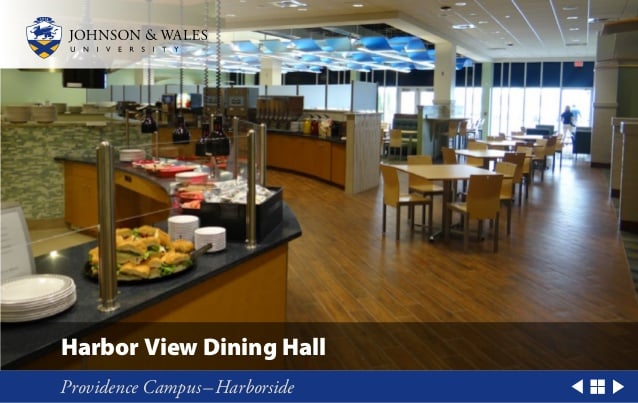
Something different for you going over there is their meal plan set up. A mandatory thing so it’s a matter of do you sign up for 14 swipes a week or 21 I think is the larger option. How they work is in your dorms they have buffet style canteens in which one swipe to enter and then eat as much as you want, McNultty being better than Harbour View in this case, and only certain meals change daily while the rest are mainstays. They also work in places on campus so a swipe may get you a slice of pizza, a drink and a salad or two pizza slices and a drink etc. You learn a lot more about this stuff there and people are nice enough to help you if you are better off paying than wasting a swipe on something.

A main one people use swipes for is the Starbucks on campus. A swipe can get you a drink and a pastry for one but the lines before classes are incredibly long so you have to pick and choose when you go.

If you go McNultty although the food is better there, they are also surrounded by shops, restaurants and takeaways so 100% go for the fewer swipes and explore more things. Harbour View is a bit out of the way from most things so consider both options and see what kind of person you are.


Classes
One final thing to note is they do morning and evening classes. Morning classes begin at 06:45 sharp, in pristine uniform and the evening class is 13:45 I believe. We were placed in the morning classes which isn’t too bad, gives you your whole evening to get work done and familiarize yourself with the college and surroundings.
A negative is they don’t provide changing rooms so you walk or get the bus in your uniform. Just something to note.

If anyone has any questions which haven’t been answered here then speak to Don and ask for my details and I'll be happy to get back to you and talk to you about any concerns or answer whatever questions you may have. 

Until then,
Calem